- Available 24 hours a day, 7 days a week
- Over 30 years of experience
- Safe disposal of asbestos waste
ASBESTOS
Asbestos Removal in Darlaston, Wednesbury, Surrounding Areas
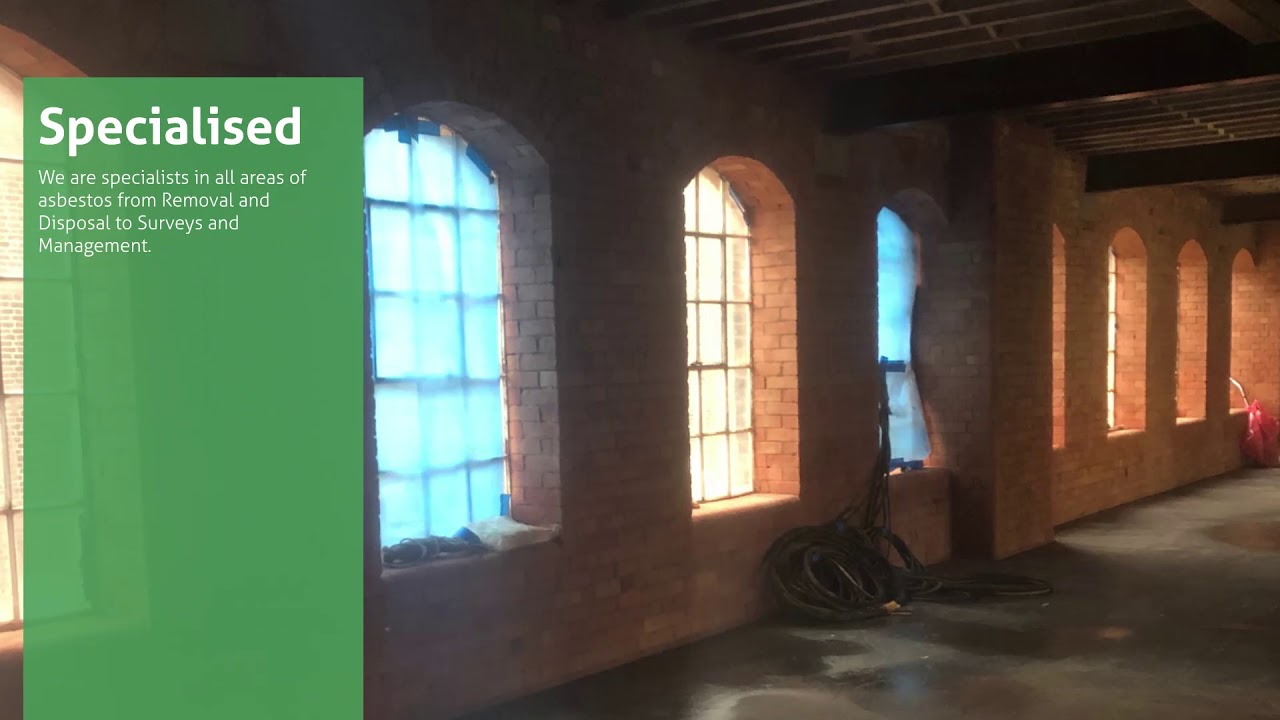
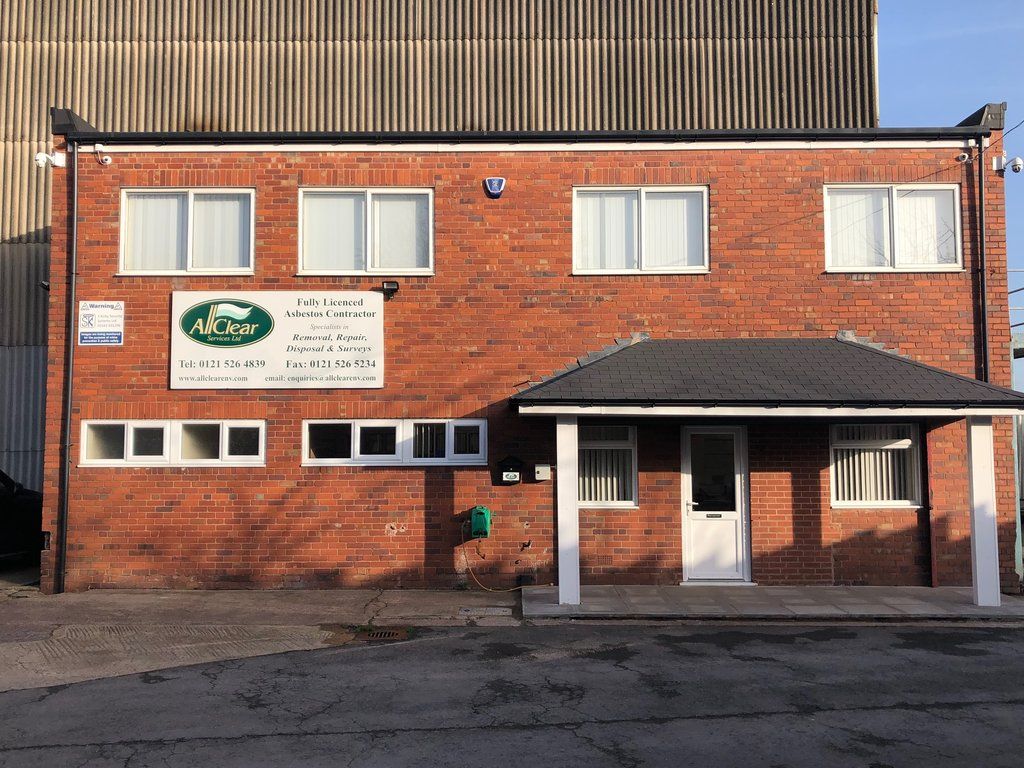
Based in Darlaston in the West Midlands, we work nationwide with commercial, domestic and industrial clients to provide them with a safe and professional way of removing asbestos. We are a family-run business with over 30 years’ experience amongst our team of asbestos specialists and are available to tackle small and large contracts. Our services include asbestos removal, asbestos management, asbestos waste disposal and asbestos abatement.
Our phone lines are open 24 hours a day, seven days a week, and emergency enquiries are always welcome.
Asbestos Removal Specialists in Darlaston
As a business, we take our responsibilities seriously, holding up to £10 million employers’ liability insurance and £5million public liability insurance. We are also registered by the Environmental Agency to carry and transfer hazardous waste and have our own waste transfer station to safely dispose of asbestos.
Expert Asbestos Removal Services in Wednesbury
Our asbestos specialists are experts in all areas of asbestos removal and offer professional services, including:
We Also Offer Our Asbestos Removal Services Nationwide
We work with both public and private property clients nationwide.
How Asbestos Removal Works
Discovering that your property might contain asbestos is often a stressful experience. To help put your mind at ease, we follow a systematic approach designed to eliminate the hazard while ensuring the highest levels of safety for everyone involved. Our process is transparent and adheres to the most stringent UK regulations.
The process starts with a comprehensive inspection of the premises. We identify the location and condition of the materials to understand the potential for fibre release. This allows us to build a detailed safety roadmap for the project, ensuring we choose the right tools and techniques for your specific building layout.
For many asbestos projects, we are legally required to inform the Health and Safety Executive before we begin. This statutory notice period ensures that the governing bodies are aware of the work and can verify that it is being managed by a fully licensed professional.
To prevent any cross-contamination, we create an isolated environment around the work area. This involves using heavy-duty plastic sheeting to build airtight enclosures. We also use high-efficiency air management units to maintain negative pressure, which ensures that air only moves into the work zone and is filtered before it ever leaves.
Our technicians use precision methods to remove the asbestos-containing materials. We focus on dust suppression, which usually involves applying a specialised liquid to the material to keep it saturated. This prevents microscopic fibres from becoming airborne, keeping the internal environment safe while the material is being handled.
Once the material is detached, it is immediately placed into redundant layers of heavy-duty packaging. We use a double-bagging technique where the inner bag is sealed with industrial tape before being placed into a secondary outer bag. This creates a secure, leak-proof container for the hazardous waste.
After the bulk material is gone, we perform a micro-cleaning of the entire enclosure. We use industrial vacuums equipped with high-efficiency particulate air filters that are designed specifically for hazardous dust. This is followed by a meticulous wet-wiping of every surface to ensure no trace of residue remains.
We never consider a job finished based on a visual check alone. We bring in an independent laboratory to perform objective verification through air sampling. They use high-powered microscopes to confirm the air quality is safe. Only when they issue a certificate of reoccupation do we dismantle the containment barriers.
The final stage is the safe transport of the waste. We take the sealed bags to a dedicated facility that is legally authorised to handle asbestos. You will receive a waste transfer note, which acts as your official record that the material was disposed of in full compliance with environmental law.
Types of Asbestos We Can Remove
Asbestos was a staple of the construction industry for decades due to its durability and resistance to heat. While there are several variations, we most frequently encounter these three types during our work in the West Midlands.
Chrysotile (White Asbestos)
This is the most common variety and has a serpentine texture, meaning its fibres are relatively flexible. It was used extensively in domestic and commercial building products. Common materials include floor finishes, ceiling panels, garage roof sheets, and the gutters or soffits found on many post-war homes.
Amosite (Brown Asbestos)
Brown asbestos is significantly more hazardous because its fibres have a needle-like structure that is very easy to inhale. It was a popular choice for high-strength insulation. You will often find it in fire doors, structural cladding, ceiling tiles, and the insulation boards used to line airing cupboards.
Crocidolite (Blue Asbestos)
Considered the most dangerous form of the mineral, blue asbestos is extremely brittle and breaks into sharp, thin fibres. It was often used in high-performance industrial applications. It is most frequently found in sprayed fireproofing on steel beams, as well as in pipe lagging and certain heavy-duty gaskets.
Why Choose All Clear Services Ltd?
Here at All Clear Services Ltd, our clients choose our services for several reasons:
Contact Us
Reviews